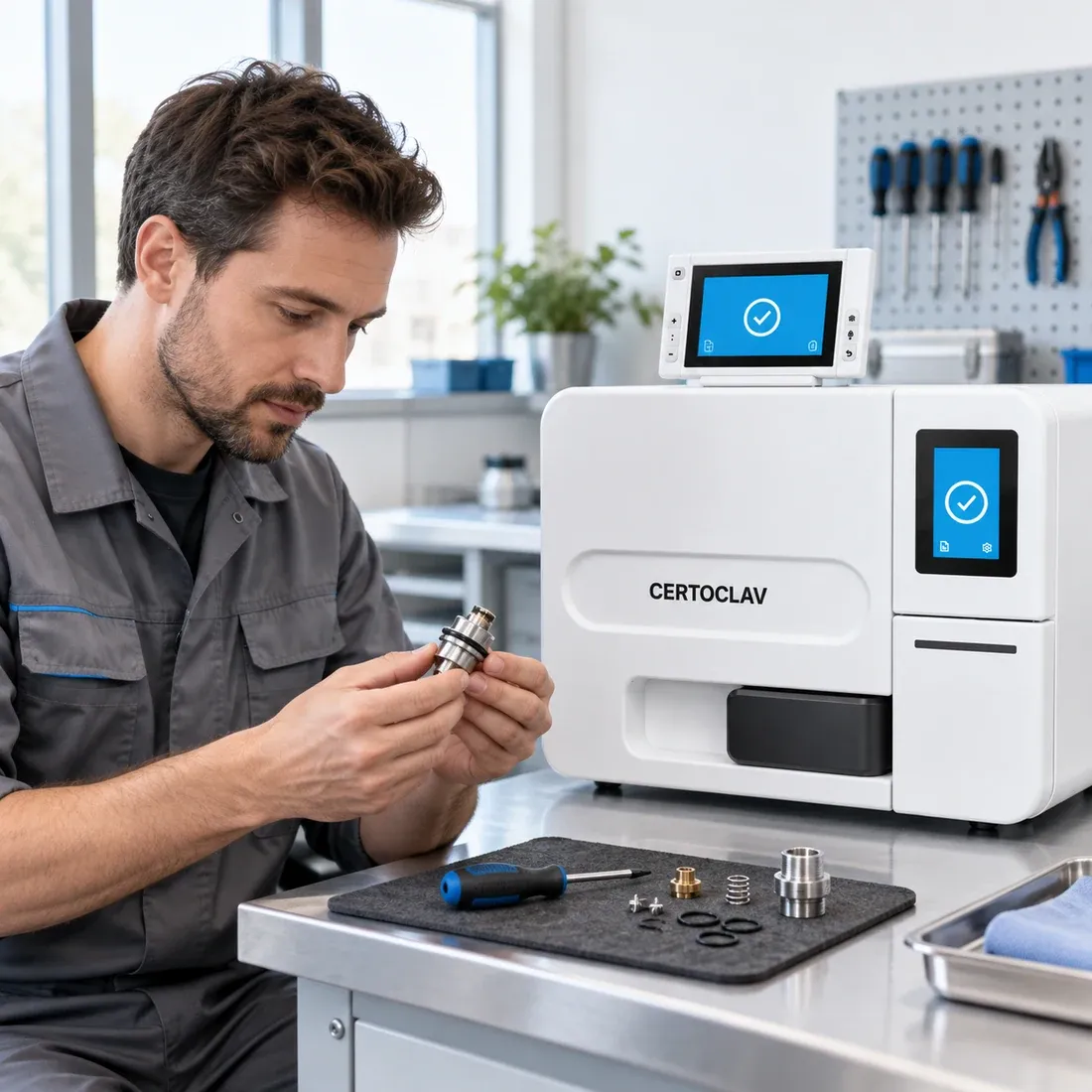
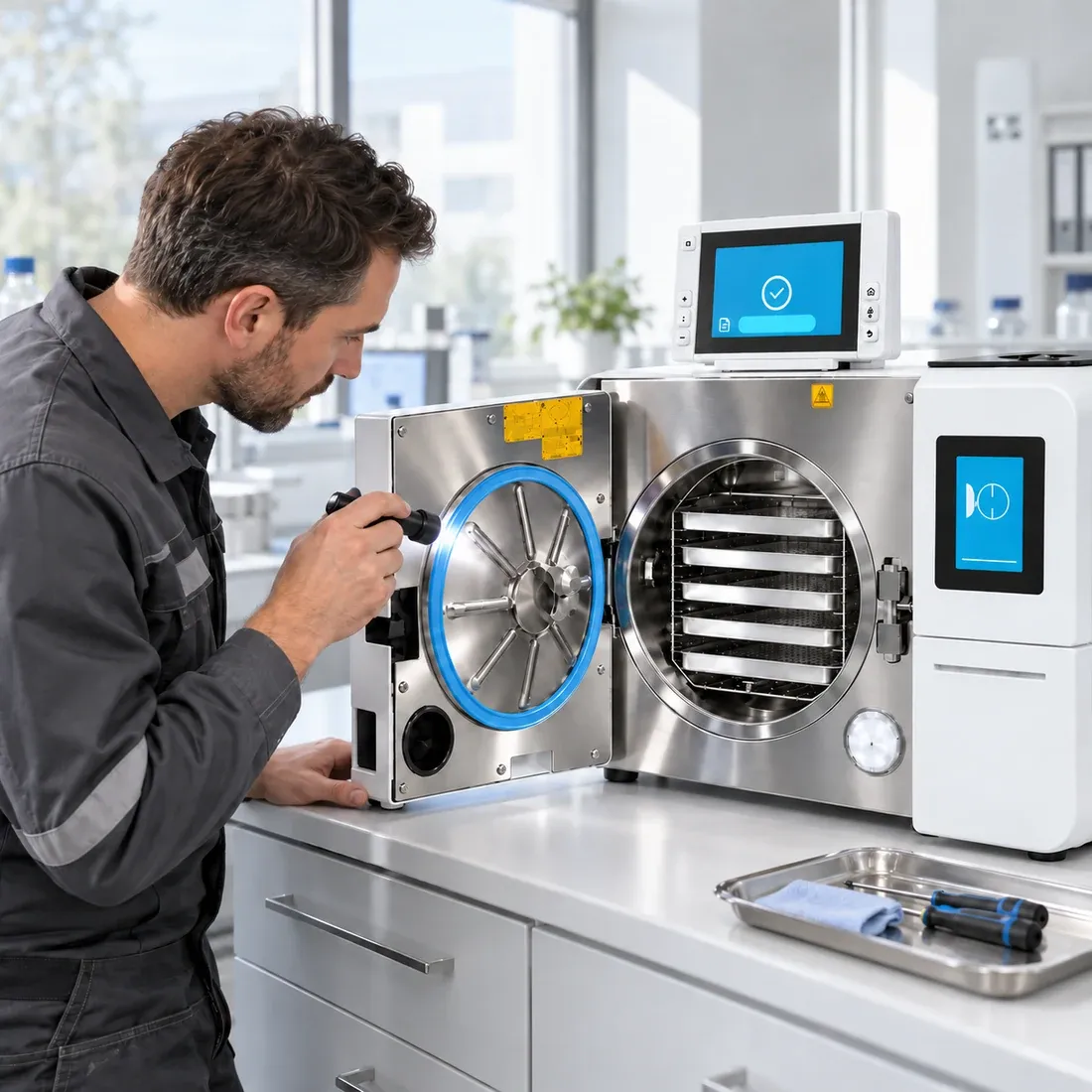
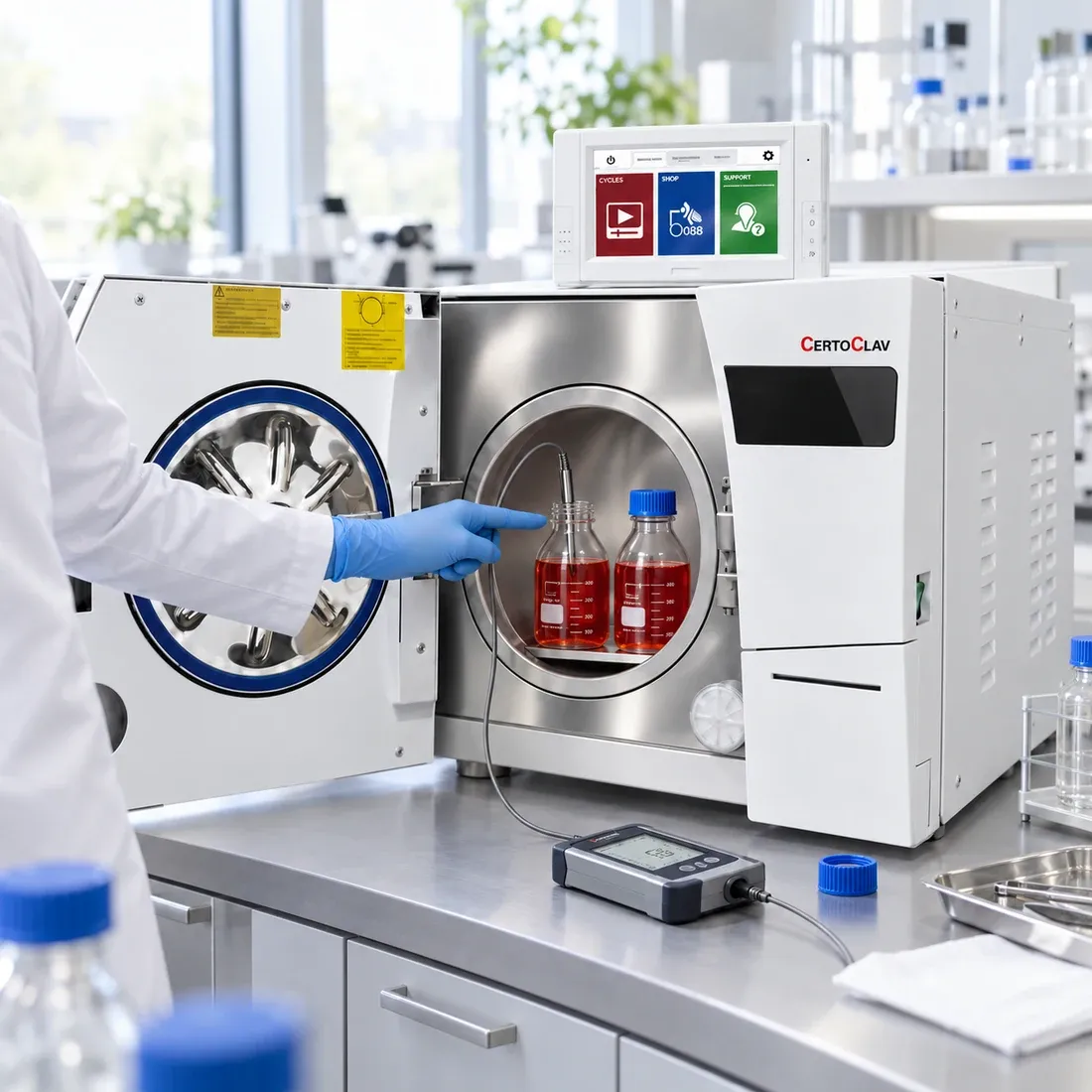
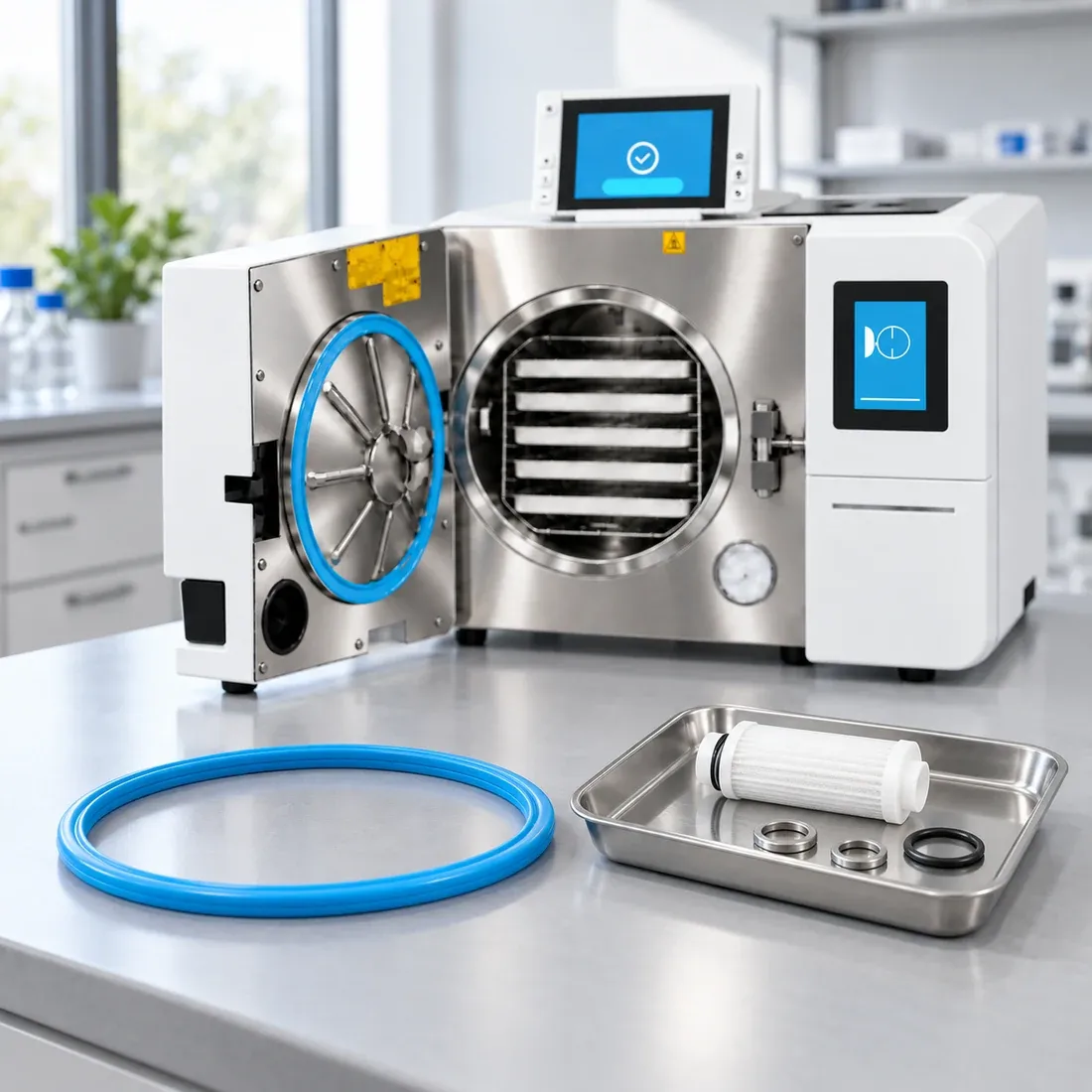
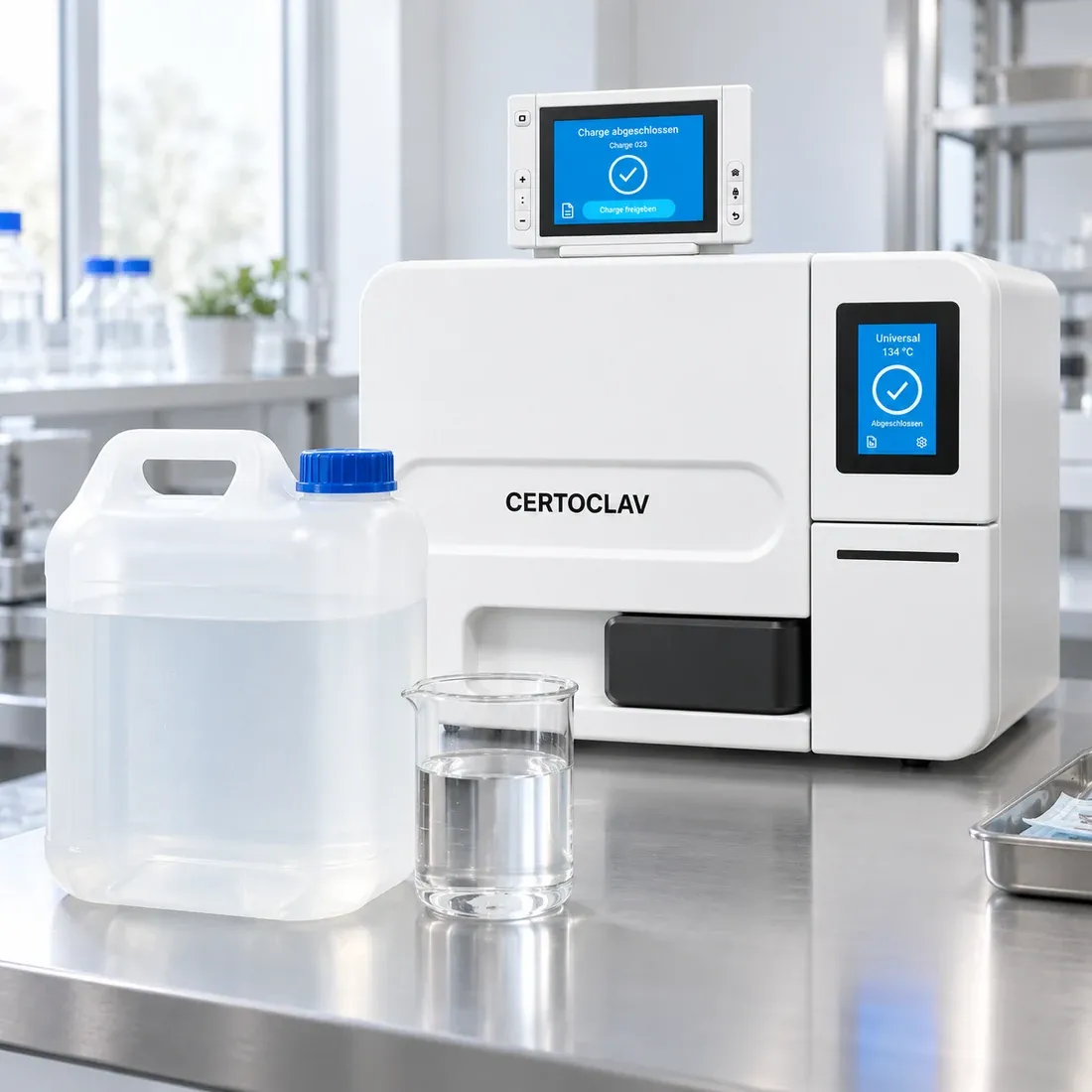


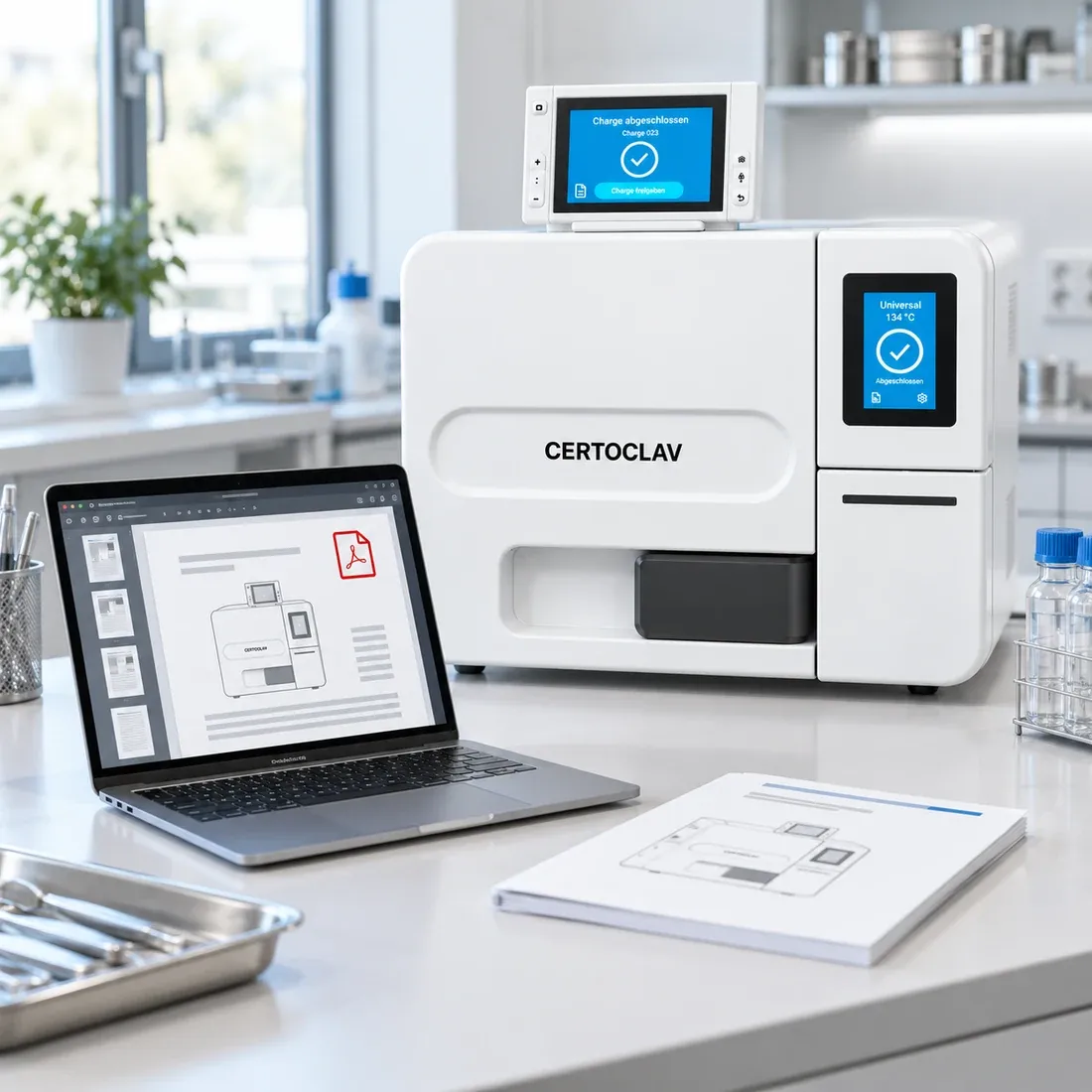



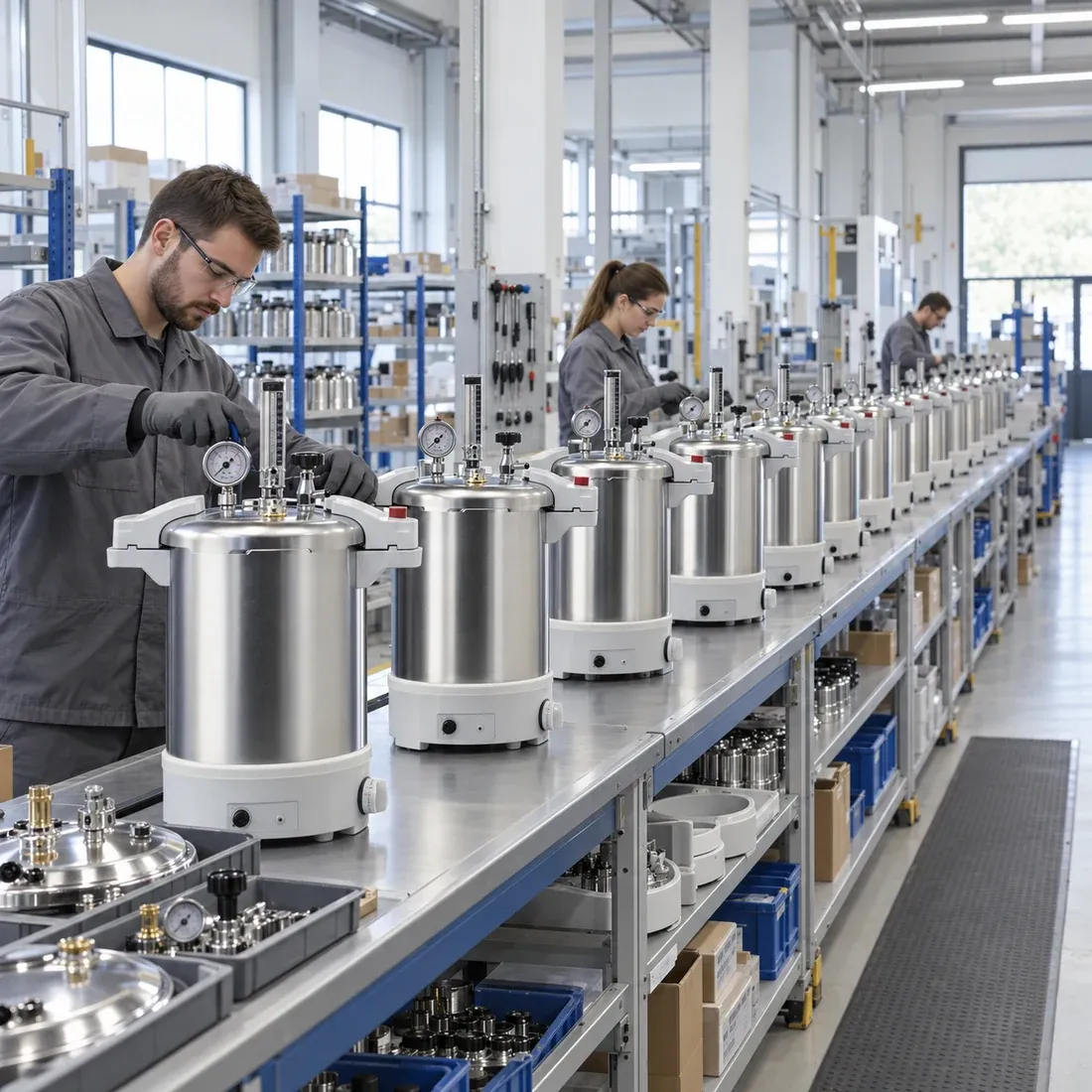
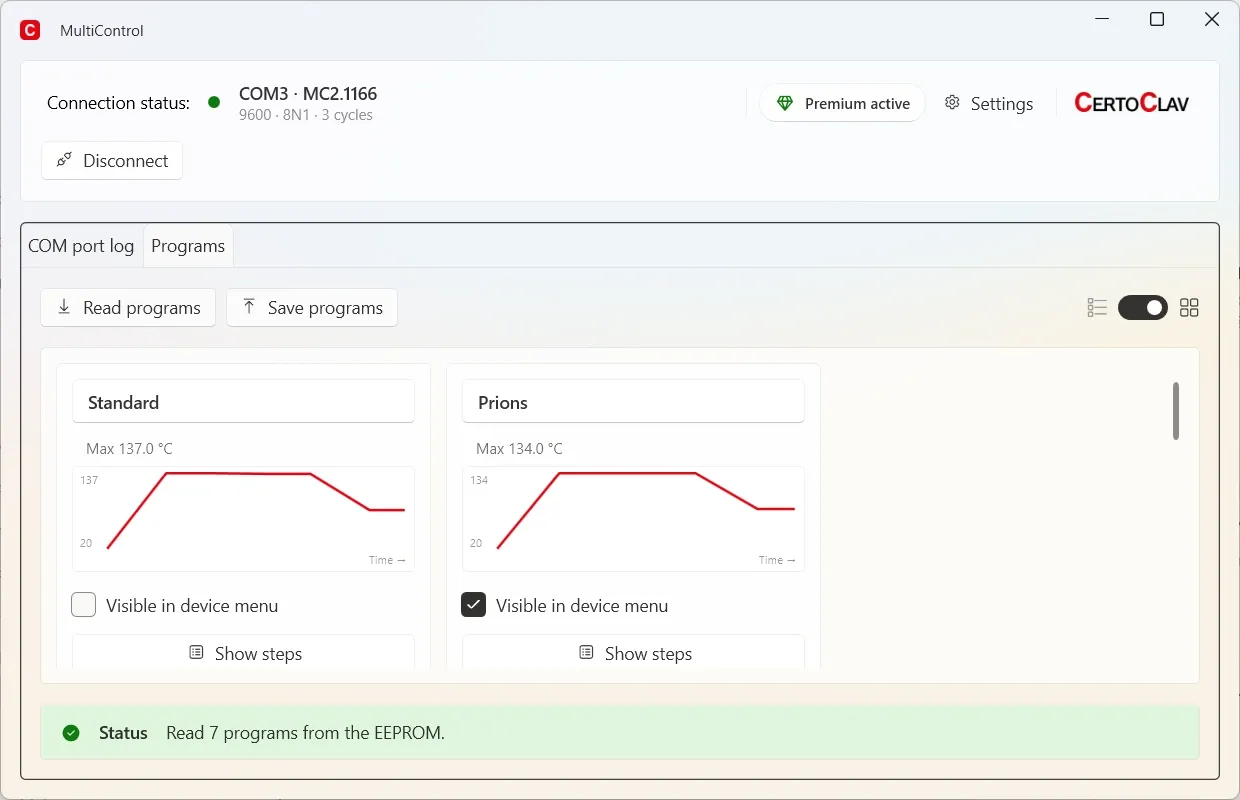
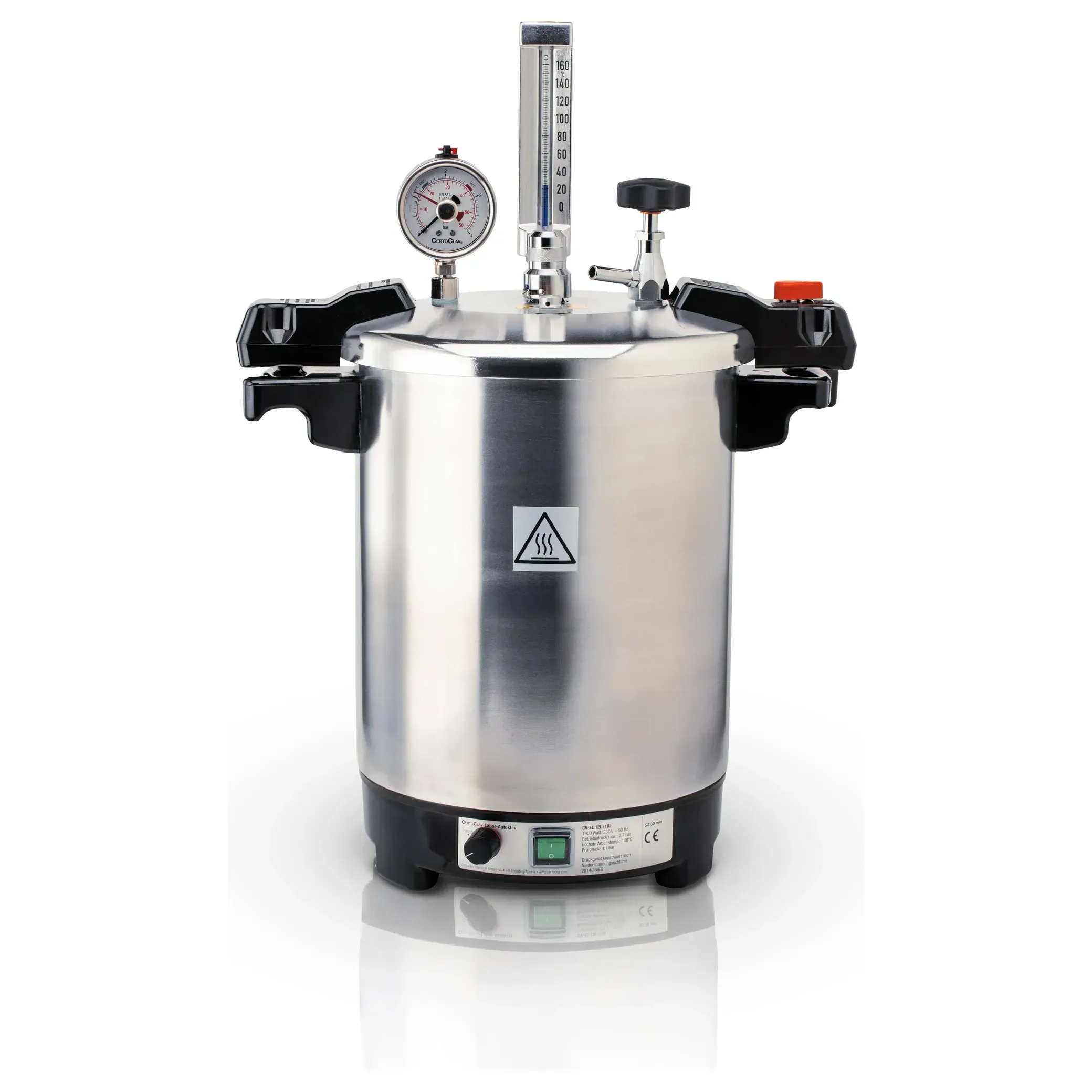
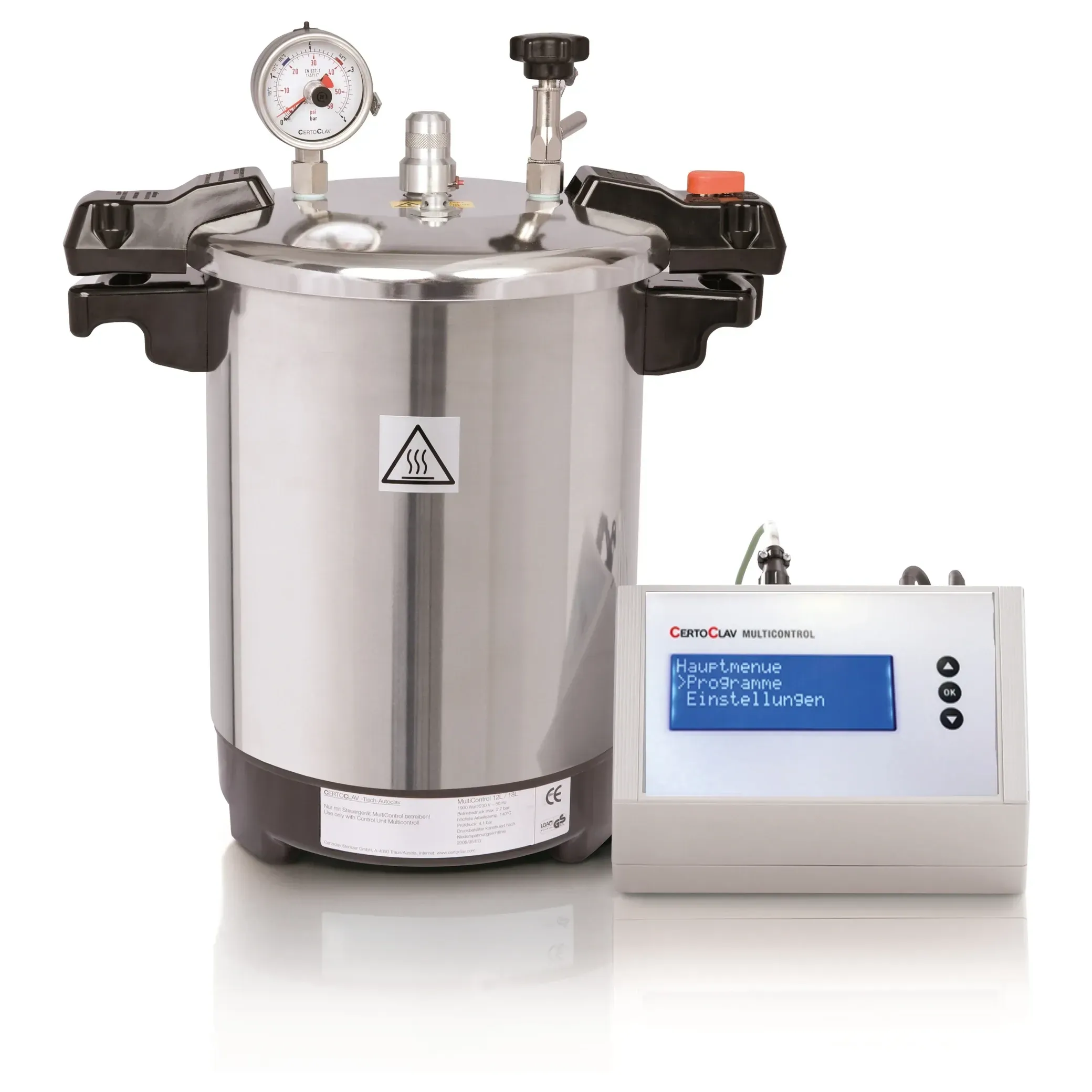
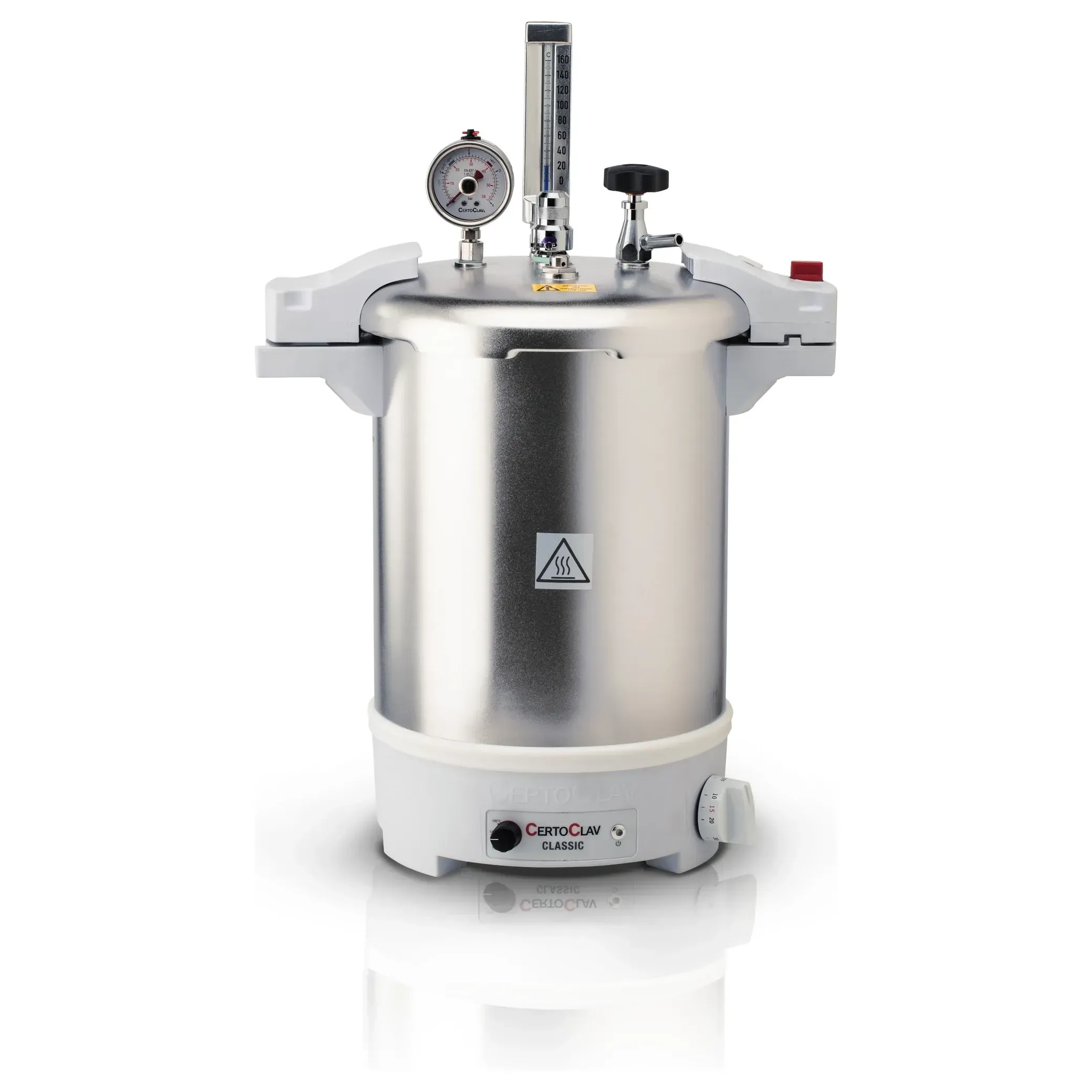
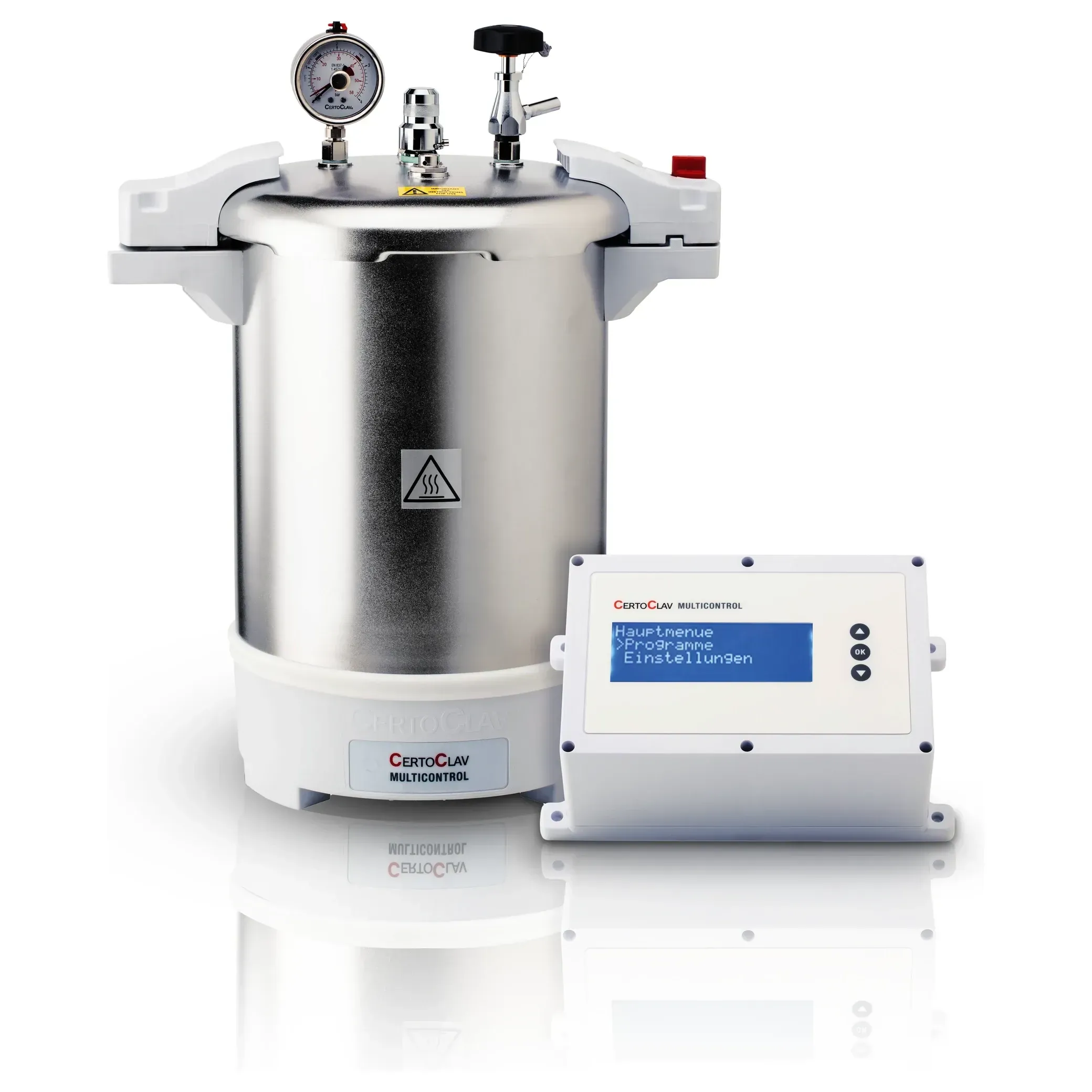
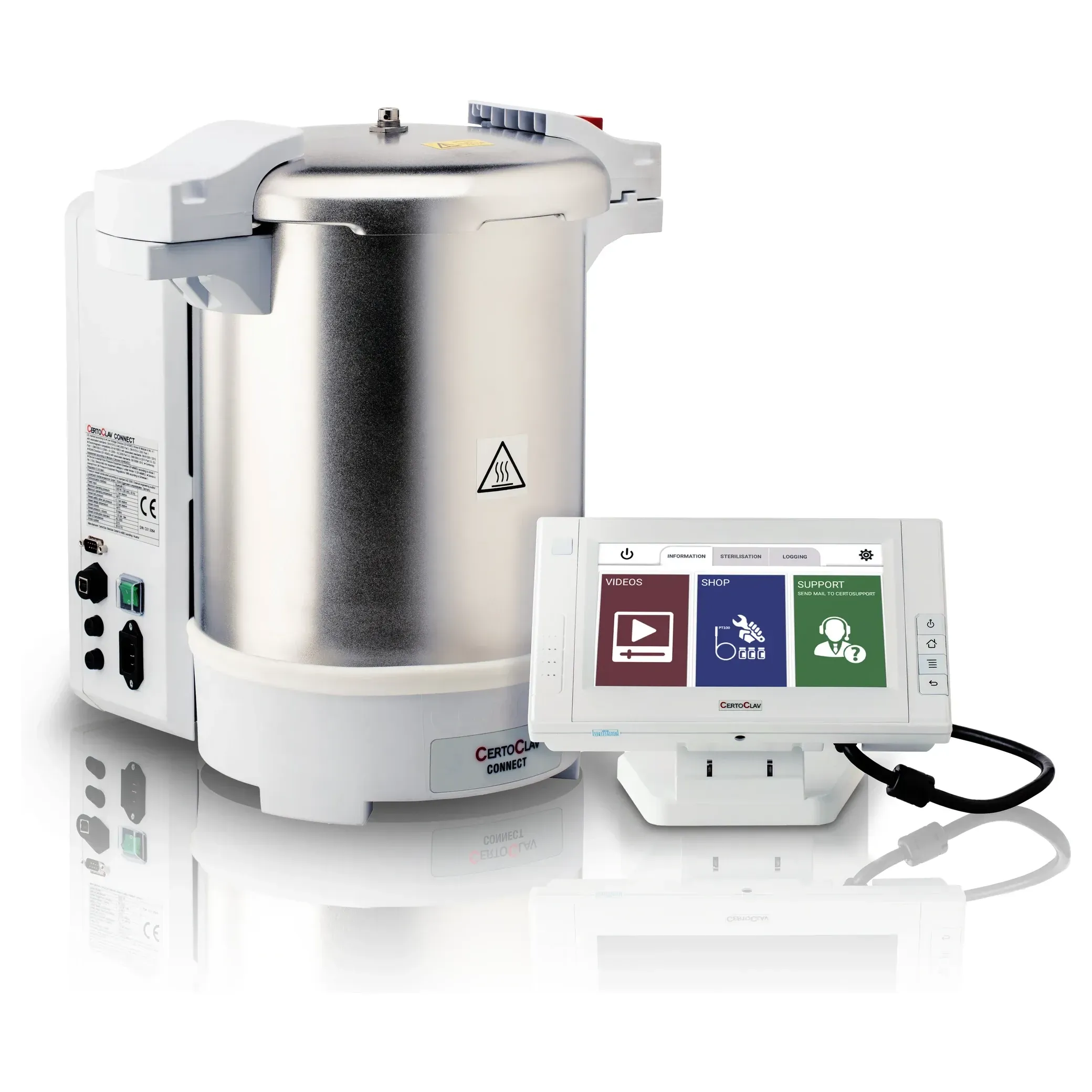
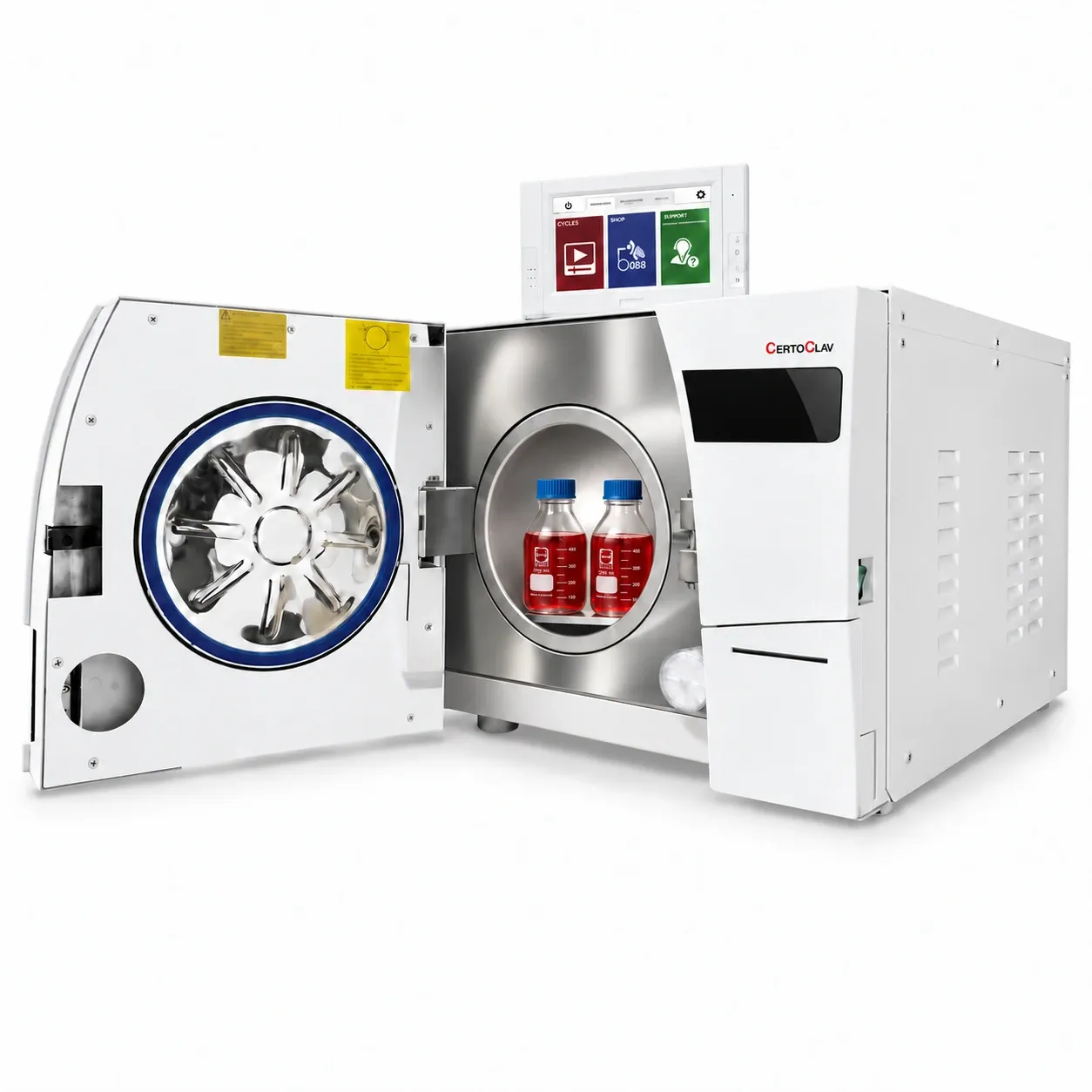
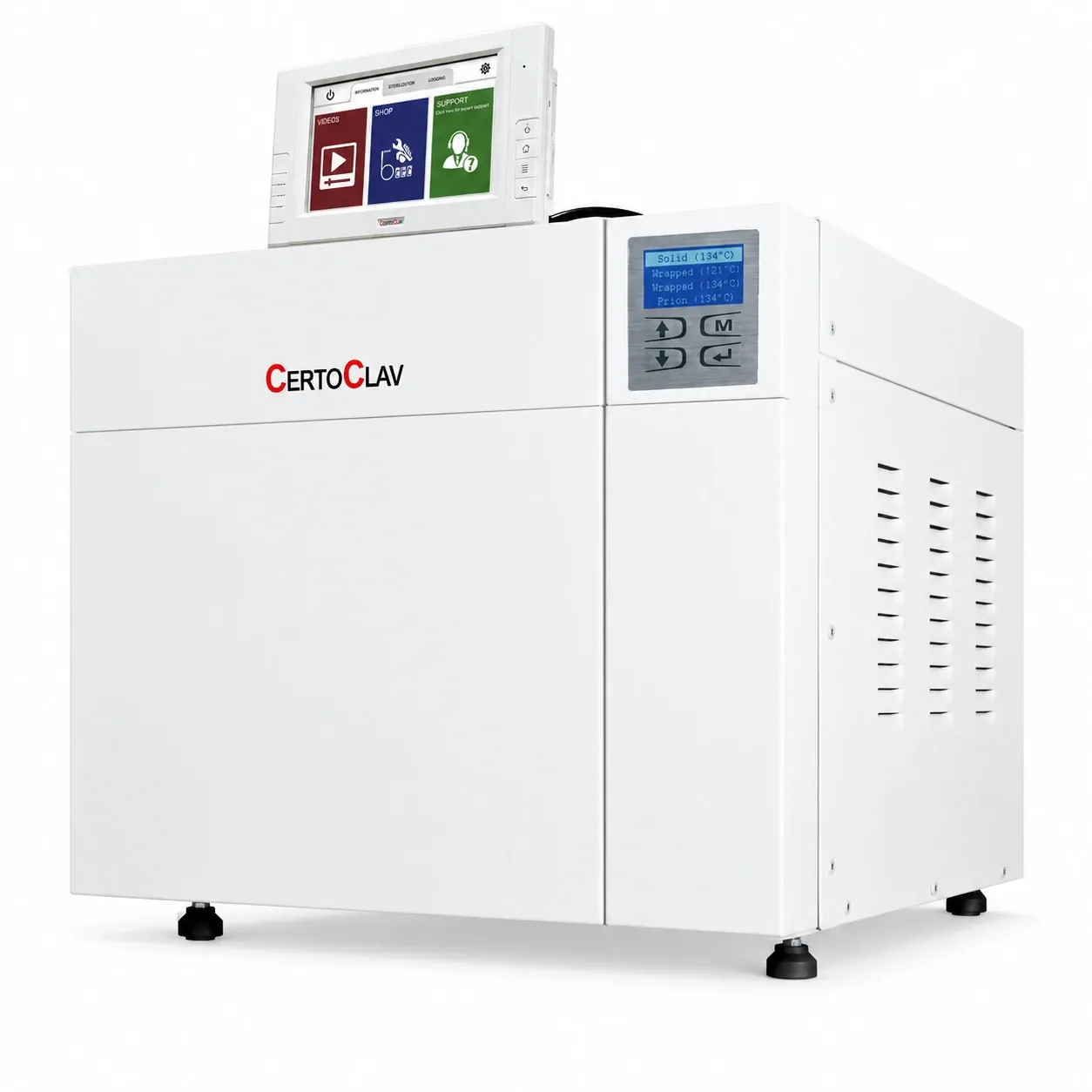

The four phases of a steam sterilisation cycle.
A chamber that reads 121 °C tells you about the chamber, not about the core of the load. This is how the cycle closes that gap.
Four phases, and what can go wrong in each.
- 01
Fractionated vacuum
Air is the enemy, not the clock.
Air pockets insulate. A chamber that reads 121 °C can still hide a cold core inside a wrapped load. Repeated evacuation and steam injection flush the air out before sterilisation begins.
- 02
Heat-up
Saturated steam, not hot air.
Steam carries roughly five times the usable energy of air at the same temperature, and it releases that energy the instant it condenses on the load. Pressure and temperature rise together. That relationship is what makes the process verifiable.
- 03
Holding time
Measured where it matters.
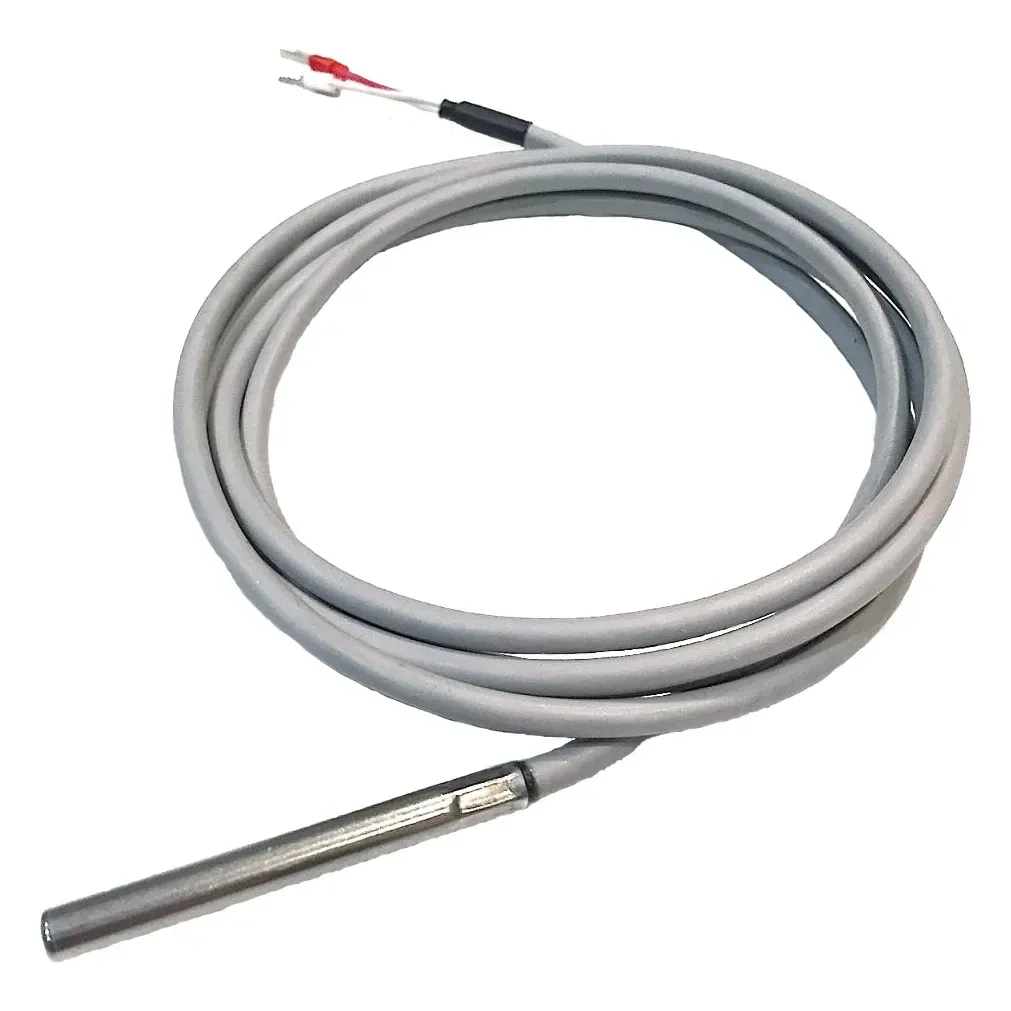
The flexible probe sits inside the vessel, not in the chamber wall. On liquid loads the medium lags behind the chamber by minutes, and a cycle timed on chamber temperature would end too early.
- 04
Controlled exhaust and drying
The last phase decides whether the load stays sterile.
Vent a liquid load too fast and it boils over. Leave moisture on a wrapped load and the sterile barrier is compromised. Exhaust is ramped to the load type, then vacuum-assisted drying removes residual moisture.
Which cycle does your load need?
Tell us the vessel, the volume and how often. We will tell you which model covers it.